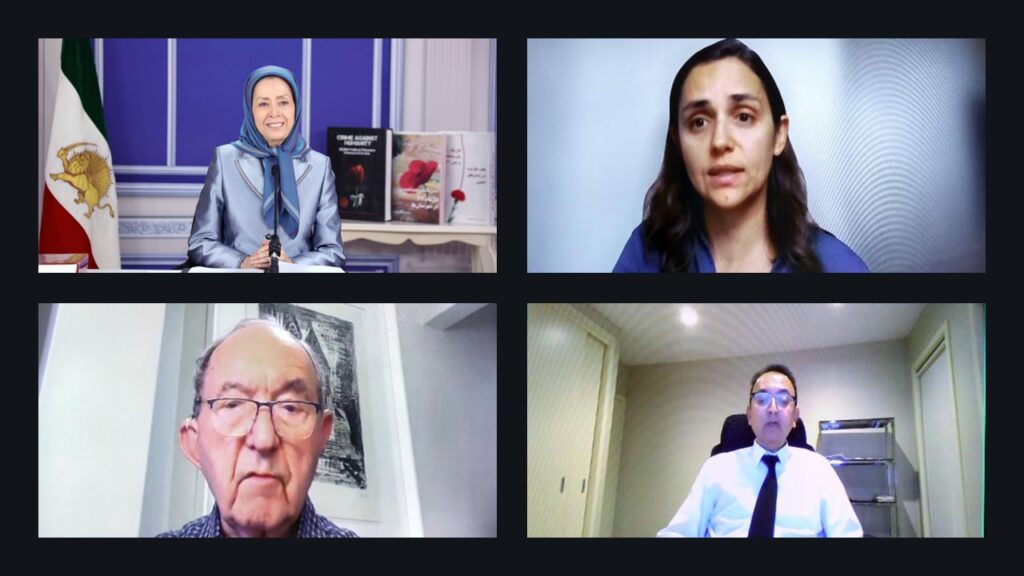
Distinguished international human rights experts, former senior UN officials and leading international jurists joined a JVMI online conference on 4 September 2026, warning that Iran’s escalating political executions cannot be separated from the unresolved crimes and impunity of the 1988 massacre.
The conference, entitled “Ongoing Crimes Against Humanity: Political Executions in Iran and the Duty to Act”, was organised by Justice for the Victims of the 1988 Massacre in Iran (JVMI) to mark the 38th anniversary of the 1988 massacre of political prisoners.
Participants examined the continuing pattern linking the mass extrajudicial executions and enforced disappearances of 1988 to the politically motivated death sentences and executions being carried out in Iran today. Speakers called for an immediate halt to executions, protection for political prisoners, the use of universal jurisdiction, and the establishment of an independent international accountability mechanism.
Observers included representatives of Permanent Missions to the United Nations in Geneva and New York, staff of the Office of the United Nations High Commissioner for Human Rights, members of the UN Special Procedures, international human rights and legal experts, NGO representatives and members of Iranian communities across Europe. The conference also included testimony from the daughter of a political prisoner publicly executed in Iran.
“A continuing pattern of impunity”
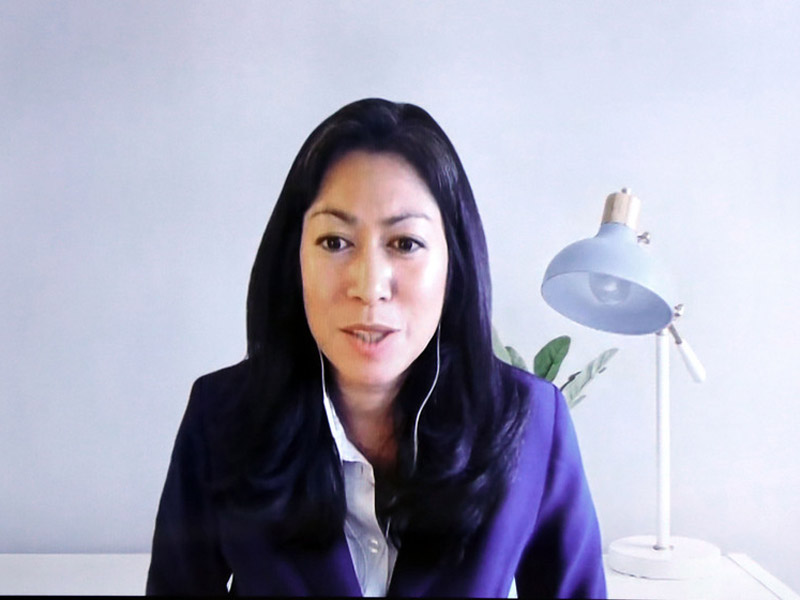
Opening the conference, moderator Hanifeh Khayyeri, an international policy expert, said the meeting concerned “memory, responsibility and urgent action for those silenced, and for those still at risk today”.
She placed the current executions in their historical context:
“Today’s discussion is not only about the past, and not only about Iran’s domestic repression. It is about a continuing pattern of impunity connecting the 1988 mass executions of political dissidents to the new wave of political executions in Iran today.”
Mark Ellis: The law stands with the victims
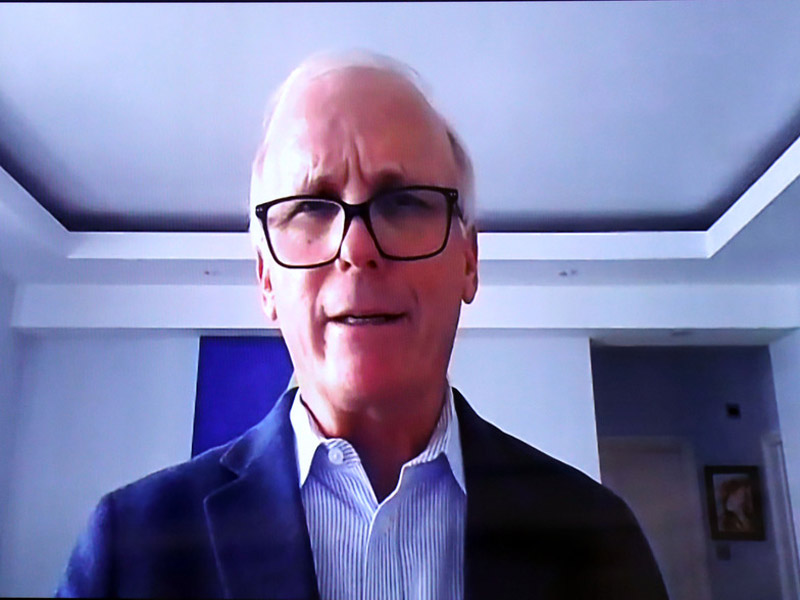
Mark Ellis, Executive Director of the International Bar Association, said the Iranian authorities continued to use the death penalty as an instrument of political repression intended to silence dissent, instil fear and prevent renewed popular protest.
He warned that the recent executions were not isolated violations, but part of a sustained campaign reflecting a pattern of atrocity crimes. He also highlighted the importance of universal jurisdiction, under which national courts may prosecute certain international crimes irrespective of where they were committed or the nationality of the perpetrator or victim.
Referring to the conviction of Hamid Nouri in Sweden for his role in the 1988 massacre, Dr Ellis said the case demonstrated the role national courts could play in confronting impunity.
He concluded:
“The architects and executioners of Iran’s atrocities should harbour no illusions that time is on their side. In honouring the memory of those who perished, from the mass graves of 1988 to the gallows of 2026, we affirm that their lives mattered and that the law stands with them.”
He added that the international community must ensure that the victims’ stories are not “bulldozed into oblivion”, stressing:
“The world is indeed watching. The evidence is being preserved, and the perpetrators of these crimes will be held accountable.”
Maryam Rajavi: Justice requires binding decisions and serious action
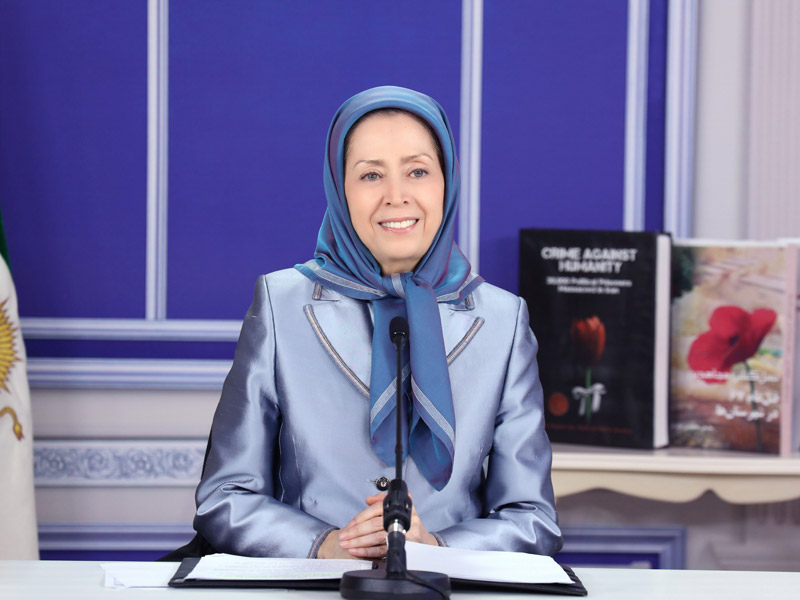
Maryam Rajavi, President-elect of the National Council of Resistance of Iran, said the international community’s failure to act over the 1988 massacre had allowed those who ordered and carried out the killings to enjoy impunity.
She warned that Iran was now witnessing new human rights crimes following the same pattern, with prisoners being executed or sentenced to death for their political beliefs and opposition to the authorities.
Mrs Rajavi said:
“Last year, for the first time, United Nations Member States officially recognised the unlawful and arbitrary executions of 1988 in the UN General Assembly’s annual resolution on Iran. This is an important first step, but justice requires binding decisions and much more serious action.”
She called on governments to establish an international mechanism to bring those responsible for the 1988 massacre to justice, use universal jurisdiction to prosecute perpetrators, and condition diplomatic and trade relations with Iran on an immediate end to executions and the release of political prisoners.
She also reaffirmed the National Council of Resistance of Iran’s commitment to abolishing the death penalty and establishing an independent judiciary based on international standards.
Stephen Rapp: The executions are the result of impunity
Stephen Rapp, former US Ambassador-at-Large for Global Criminal Justice and former prosecutor of the Special Court for Sierra Leone, said the current “epidemic of executions” was rooted in the failure to hold the perpetrators of the 1988 massacre accountable.
“What we see in Iran today, in this epidemic of executions, is the result of impunity. The fact that the world stood by when 30,000 men, women and children, political prisoners, were executed created the perception that they could get away with these crimes.”
Ambassador Rapp drew on international experience in the former Yugoslavia and Syria to argue that accountability could influence political realities even when justice initially appeared unattainable. He stressed the importance of documentation, fact-finding, national prosecutions under universal jurisdiction and continued diplomatic pressure.
Addressing the Iranian people, he said:
“We stand with them and will not forget. We will do all that we can to make sure that those who have died do not die in vain, that more do not die, and that the day of justice will arrive.”
Javaid Rehman: Warnings of renewed political executions are becoming reality
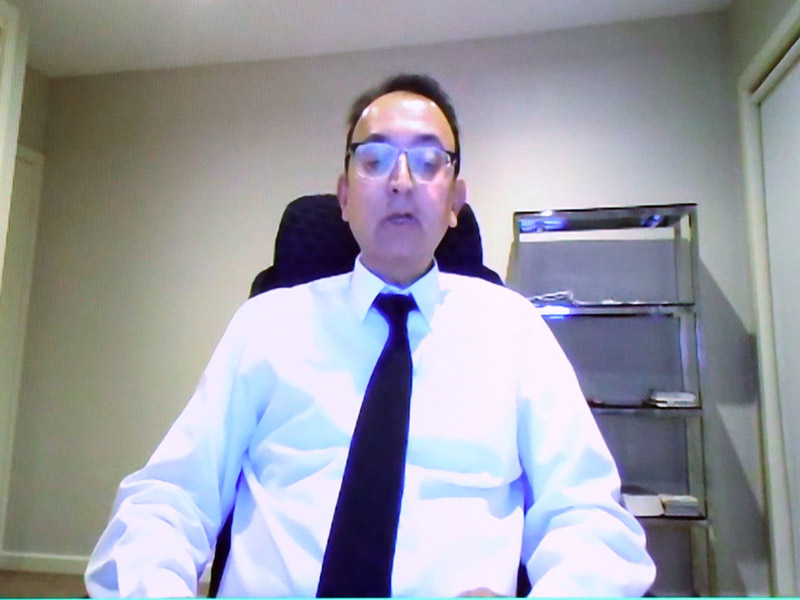
Javaid Rehman, former UN Special Rapporteur on the situation of human rights in Iran, paid tribute to the victims of the 1988 massacre and expressed solidarity with political prisoners on death row and their families.
He recalled that his July 2024 report documented the summary, arbitrary and extrajudicial executions, torture and enforced disappearances of tens of thousands of political opponents between 1979 and 1988. He said these violations amounted to crimes against humanity and genocide.
Professor Rehman warned:
“My prognosis of the massacre of political prisoners, and my warnings about a recurrence of the 1988 massacre, are sadly turning out to be a reality right in front of us today.”
He said individuals were again being sentenced to death and executed not for criminal conduct, but for “their political beliefs, organisational affiliations and refusal to submit to the regime”.
Professor Rehman called on the co-sponsors of the forthcoming UN General Assembly Third Committee resolution on Iran to support the establishment of the independent accountability mechanism recommended in his report:
“It is absolutely essential that justice is dispensed to the victims of the 1988 massacre in Iran and to the victims of related atrocity crimes.”
Grażyna Baranowska: Enforced disappearance is a continuing violation
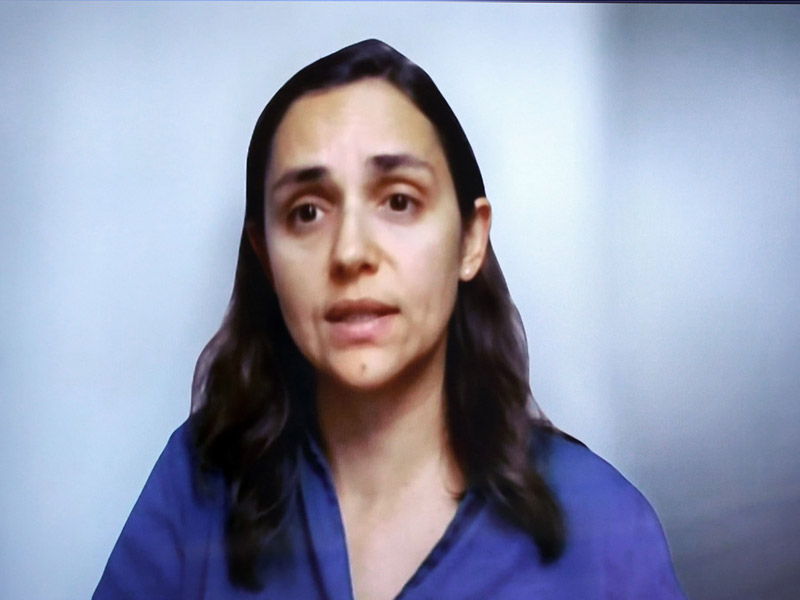
Grażyna Baranowska, a member of the UN Working Group on Enforced or Involuntary Disappearances, expressed the Working Group’s solidarity with families whose relatives disappeared during the 1980s or in more recent events.
She explained that an enforced disappearance continues until the fate and whereabouts of the disappeared person are established. Families therefore remain victims for as long as the authorities withhold the truth.
“Enforced disappearances are a continuous violation. They continue until the fate and whereabouts of the disappeared person are addressed.”
Dr Baranowska said the Working Group dealt with individual cases concerning Iran and had urged the authorities to locate, protect, preserve and exhume mass and unmarked grave sites, and to conduct investigations in accordance with international standards.
She also stressed that memorialisation was part of the families’ right to truth and reparations:
“While families often engage in memorialisation efforts, States are still obliged to investigate, search for the remains and prosecute perpetrators. Both obligations are crucial.”
Video: Recent political executions in Iran
The conference then screened a video examining the rise in politically motivated executions following the January 2026 protests. It highlighted the use of charges such as moharebeh, or “waging war on God”, against protesters and political opponents, and drew attention to the continuity between the legal and ideological justifications used in 1988 and those being invoked today.
The video concluded with the question:
“In 1988, the world looked away. The question today is simple: will it happen again?”
Joachim Rücker: The threat has been stated, and the UN must act
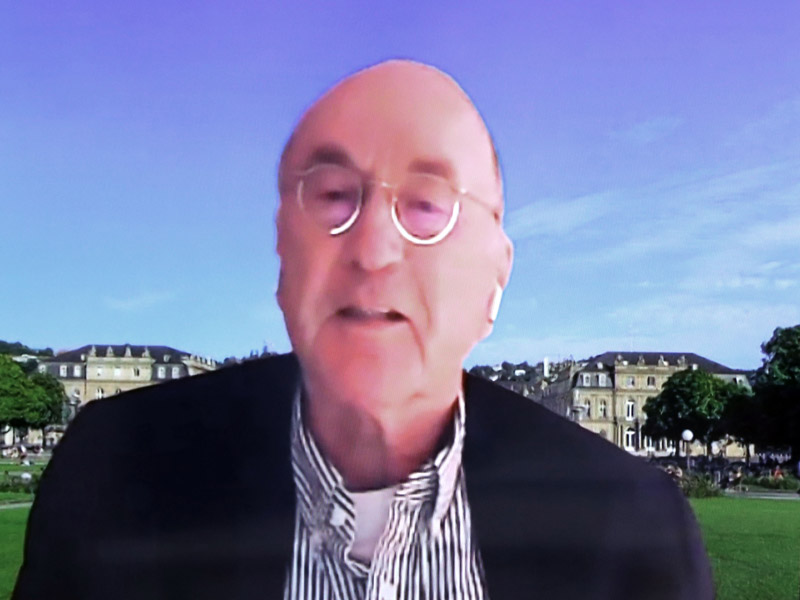
Joachim Rücker, former President of the UN Human Rights Council and former Permanent Representative of Germany to the United Nations in Geneva, said the conference had taken place at an important moment ahead of deliberations in the UN General Assembly’s Third Committee and the Human Rights Council.
He urged the United Nations and individual governments to treat an immediate halt to political executions as an explicit and urgent demand.
Ambassador Rücker said vague and elastic capital offences were being used to transform association, protest and alleged opposition links into crimes punishable by death. He also drew a parallel between the 1988 executions and the more recent use of conflict and instability as cover for arrests and accelerated executions.
“The threat is indeed stated. It is now necessary to act upon these findings.”
He called for a strong 2026 UN resolution addressing the risk of a repetition of the 1988 massacre, support for an independent international accountability mechanism, stronger UN monitoring mandates, access for UN monitors to Iranian prisons, and continued prosecutions under universal jurisdiction.
He added:
“Any agreement with Iran which fails to address human rights and an immediate halt to all political executions would be a big mistake.”
Richard Goldstone: Civil society must press political leaders to act
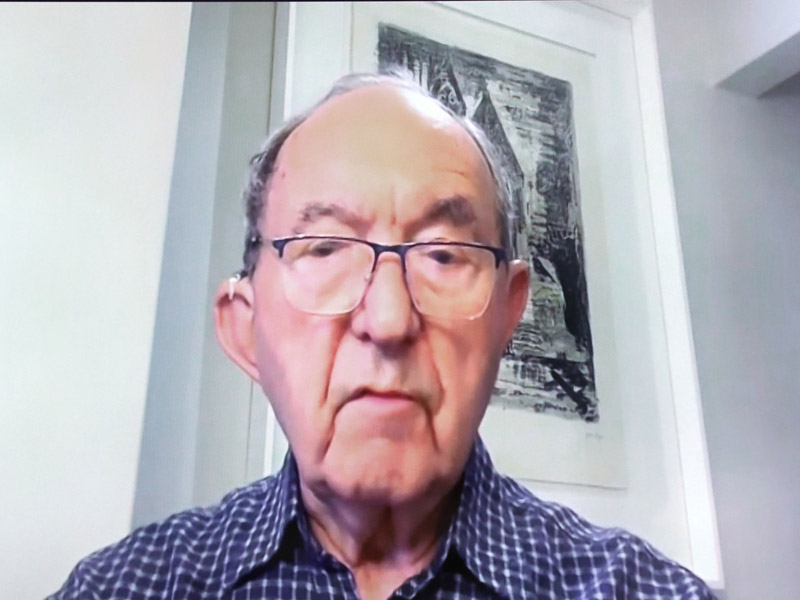
Richard Goldstone, former Chief Prosecutor of the International Criminal Tribunals for the former Yugoslavia and Rwanda, recalled how perpetrators of grave international crimes had once believed they would never be apprehended or prosecuted.
Drawing on the experience of the tribunals for the former Yugoslavia and Rwanda, as well as South Africa’s continuing investigations into crimes committed during apartheid, he said the victims of Iran’s atrocities were entitled to recognition, accountability and justice.
“The victims need recognition, accountability and the important justice to which the victims and survivors are entitled.”
Justice Goldstone emphasised that political decisions were indispensable to establishing international justice mechanisms, but said civil society could compel governments and international institutions to take action:
“If the politicians don’t do anything, nothing happens. But what is important in what you are doing here today is that civil society can get the politicians to get off their seats and do something. The ball is in their court.”
Video: Final messages of political prisoners before execution
Participants then watched a video containing final recorded messages from political prisoners before their execution. The footage placed the human consequences of political executions at the centre of the conference, showing the voices and defiance of prisoners facing death.
Elham Sajedian: Families remain tormented long after an execution
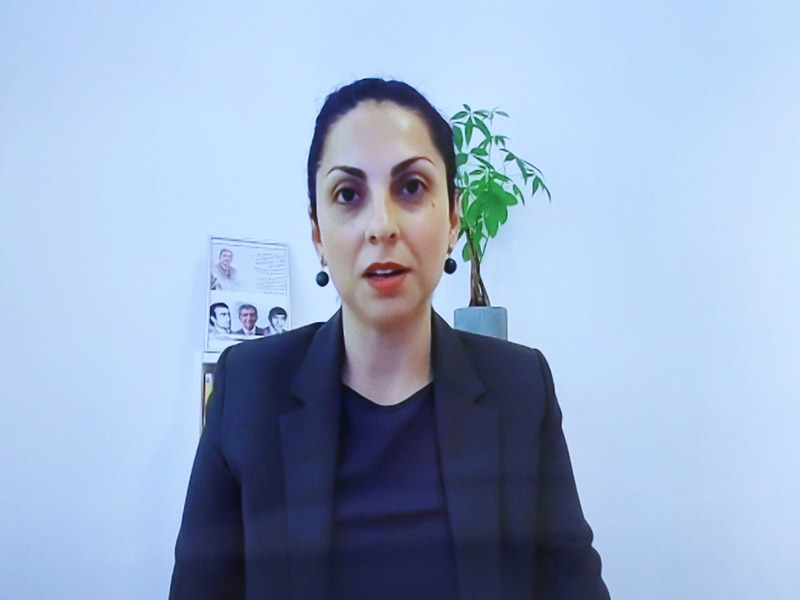
Elham Sajedian, the daughter of a political prisoner publicly executed in Iran, described the arrest, torture and execution of her father, Mohammad Sajedian.
Her father was arrested two weeks before she was born and publicly executed in Shiraz on 22 February 1985. Only 15 days passed between his arrest and execution. She was two days old when he was killed.
The authorities initially sought to bury him in secret, and his family was not allowed to place his name on his grave.
Ms Sajedian said:
“I am not telling this story to have anyone’s empathy. Rather, I would like you all to know the price that the Iranian people have paid to achieve freedom.”
She described the long-term harassment endured by her family and her own experience of the 2019 protests in Shiraz, during which she heard gunfire, saw blood in the streets and narrowly escaped being shot.
“The regime does not only kill the prisoners. Their families are also tormented long after their death.”
She appealed to the United Nations and governments to act to prevent today’s protesters and political prisoners from suffering the same fate as her father.
Annalisa Ciampi: Preserving digital evidence is vital
Annalisa Ciampi, former UN Special Rapporteur on the rights to freedom of peaceful assembly and of association, focused on the importance of preserving information and evidence of human rights violations.
She cited the cases of two videos showing a hospital in Tehran and a morgue in Mashhad following the January 2026 protests. The footage was initially removed by Meta but later restored following appeals and review by the company’s Oversight Board.
Professor Ciampi stressed the responsibilities of technology companies and digital platforms in preserving potential evidence, particularly where governments restrict information and impose internet shutdowns.
“It is especially important and vital in a country like Iran, where information is banned. We know that in early 2026 there were internet shutdowns, and even when the internet connection is on, there are still government-orchestrated blackouts.”
She said governments, international organisations, civil society, academia and the private sector all had roles to play in documenting violations and making accountability possible.
Leila Sadat: There is no statute of limitations for these crimes
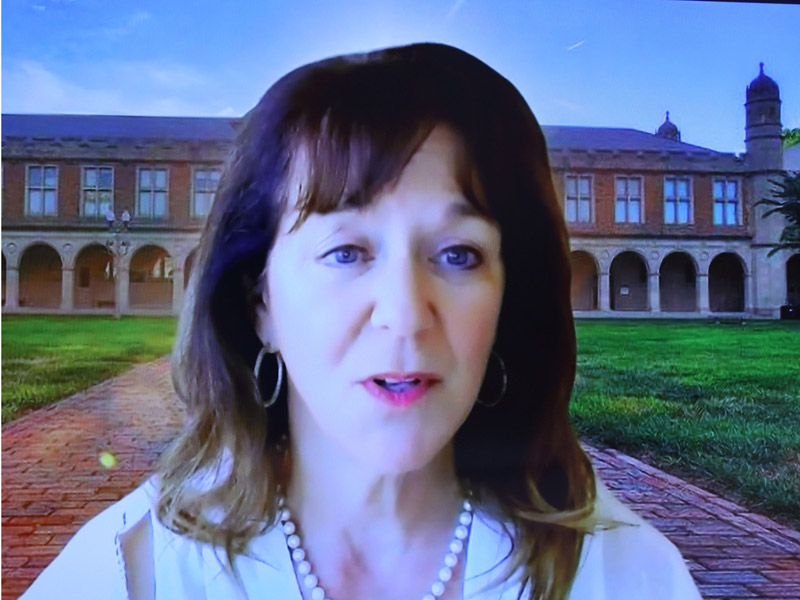
Leila Sadat, former Special Adviser on Crimes Against Humanity to the Prosecutor of the International Criminal Court, said the 1988 massacre included murder, torture, arbitrary detention, political and religious persecution, enforced disappearance and other attacks on the dignity of victims and their families.
“I underscore that there is no statute of limitations for the commission of these crimes, either before the International Criminal Court or under customary international law.”
She said perpetrators could be prosecuted before national courts using universal or other forms of jurisdiction and could, in the future, potentially face proceedings before the ICC or in Iran.
Professor Sadat described the ongoing imprisonment, torture, disappearance, persecution, extrajudicial killing and abusive use of the death penalty as a continuation of crimes fuelled by the lack of accountability for the past.
She supported the call for an independent international accountability mechanism, stronger fact-finding and the use of diplomatic pressure:
“The entire international community, and not just Iranian survivors and victims, has a real and practical interest in stopping the regime from committing these crimes, and even a duty to assist in their prevention and punishment.”
Stephanie Wolfe: Memory is the ultimate resistance
Stephanie Wolfe, President of the International Association of Genocide Scholars, said the present wave of executions was intended to break the spirit of a population demanding freedom.
“This is not a justice system. It is machinery of fear designed to enforce silence.”
She argued that the repetition of abuses was made possible by impunity, noting that perpetrators of the 1988 massacre were never held accountable.
Dr Wolfe also described the authorities’ attempts to destroy or conceal mass graves and prevent families from gathering at burial sites. She said the suppression of memory inflicted further suffering on victims’ relatives, who were denied bodies, death certificates and the right to mourn.
“The regime can pour concrete, but it cannot pave over a mother’s memory.”
She concluded:
“Memory is stronger than concrete. Memory is the ultimate resistance. Memory endures, and in the end, memory will win.”
Geoffrey Robertson KC: An authoritative judgement would defeat denial
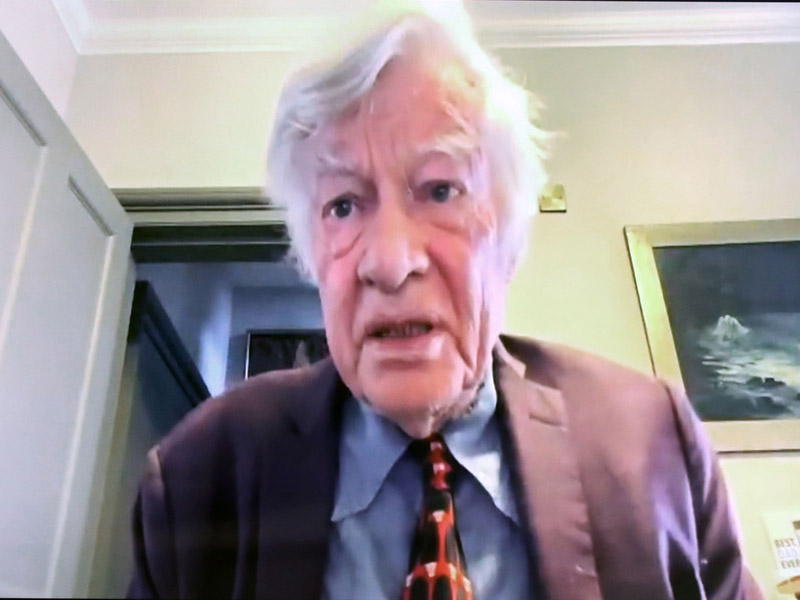
Geoffrey Robertson KC, Founding President of the UN Special Court for Sierra Leone and author of a major report on the 1988 massacre, recalled his investigation into the killings, including interviews with approximately 50 witnesses and survivors.
He described how prisons were placed under lockdown in the summer of 1988, family visits were cancelled and prisoners were brought individually before “Death Commissions”. Those who maintained support for the opposition were sent to the gallows or firing squads, while their bodies were buried in mass graves.
“By mid-August 1988, thousands of prisoners had been killed in this manner by the State, without trial, without appeal and utterly without mercy.”
Mr Robertson argued that an international trial could produce an authoritative judicial record of the massacre and prevent future denial:
“This is the main result of trials: authoritative statements of what actually happened, so that it can never be denied.”
He called for an international tribunal capable of addressing responsibility for the 1988 massacre and said an authoritative judgement would remain significant even if some of those responsible could not be brought physically before the court.
Leopoldo Maldonado Gutiérrez: Peaceful expression must never be punished with death
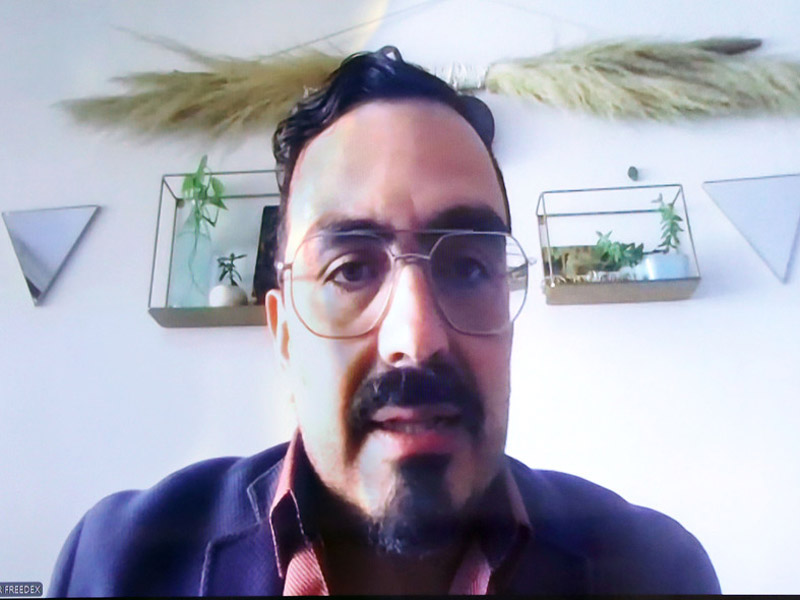
Leopoldo Maldonado Gutiérrez, UN Special Rapporteur on the promotion and protection of the right to freedom of opinion and expression, expressed solidarity with past and present victims and drew on his experience in Mexico to explain the relationship between impunity and recurring abuses.
“I have seen first-hand how impunity is the main incentive for atrocities to be repeated.”
He said dissent in Iran continued to be treated as a threat to be eliminated rather than as the legitimate exercise of a fundamental right. He also warned that internet shutdowns formed part of the same repressive logic by silencing people inside the country and preventing the outside world from learning what was happening.
Mr Maldonado Gutiérrez said:
“Peaceful expression, political opposition and participation must never, never be punished with death.”
He called for past crimes to be investigated, perpetrators to be brought to justice and present violations to be prevented from disappearing into “another chapter of impunity”.
Claudio Grossman: Solidarity matters, but it must lead to support and accountability
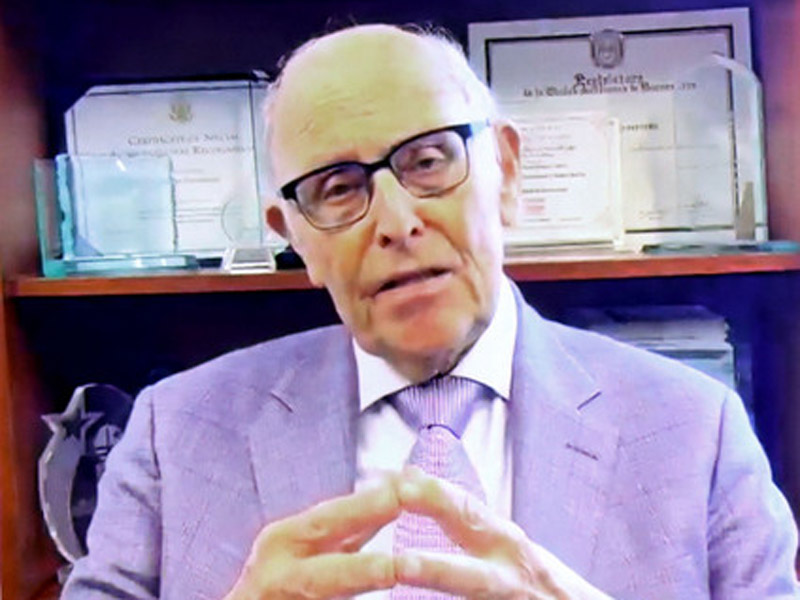
Claudio Grossman, Special Rapporteur of the UN International Law Commission, said the people of Iran had suffered torture, enforced disappearances, crimes against humanity, discrimination and massive violations of due process.
He stressed that international solidarity had real significance for detainees and victims:
“Solidarity matters. I have been in jails and detention centres where detainees have said to me: ‘I do not know whether I could be freed as a result of your efforts, but the knowledge that there are people who believe what is being done to me is a crime empowers me and demoralises my opponents.’”
Professor Grossman said solidarity must also involve creative thinking about how to support the Iranian people’s struggle for democracy and pursue the civil and criminal responsibility of those responsible for grave crimes.
He concluded with words from Pablo Neruda:
“We can cut many flowers, but we cannot stop the spring from coming. Let us be together on the side of the spring.”
A call for an active campaign for truth and action
Closing the conference, Hanifeh Khayyeri said the contributions had demonstrated that current executions formed part of a systematic pattern of political elimination rooted in decades of impunity.
“We have both the evidence and the responsibility to act. We must demand independent investigations, accountability for atrocity crimes and immediate protection for political prisoners facing execution.”
She concluded:
“Human rights cannot be secondary to diplomacy. Let today mark the start of an active campaign for truth and action.”
Justice for the Victims of the 1988 Massacre in Iran works to promote truth, justice and accountability for the mass execution and enforced disappearance of thousands of political prisoners in Iran in 1988, and for ongoing crimes against humanity committed against political opponents in Iran today.