The following is an op-ed by Ambassador Stephen Rapp, former United States Ambassador-at-Large for Global Criminal Justice, that appeared in The Washington Post on 24 July 2025:
https://www.washingtonpost.com/opinions/2025/07/24/iran-mass-executions-global-response

The Washington Post – Opinion
The next Iranian massacre is unfolding in plain sight
The regime is reviving its darkest tactics — and testing the world’s willingness to act.
July 24, 2025
By Stephen J. Rapp
Stephen J. Rapp was chief of prosecutions at the International Criminal Tribunal for Rwanda and the prosecutor of the Special Court for Sierra Leone. He served as U.S. ambassador at large for war crimes issues from 2009 to 2015.
As a former international prosecutor, I am compelled to speak out against a pattern of escalating human rights violations in Iran, a pattern that evokes the darkest chapters of that country’s history and demands a sustained international response. At stake is not only justice for the victims, but also the world’s credibility in preventing mass atrocities.
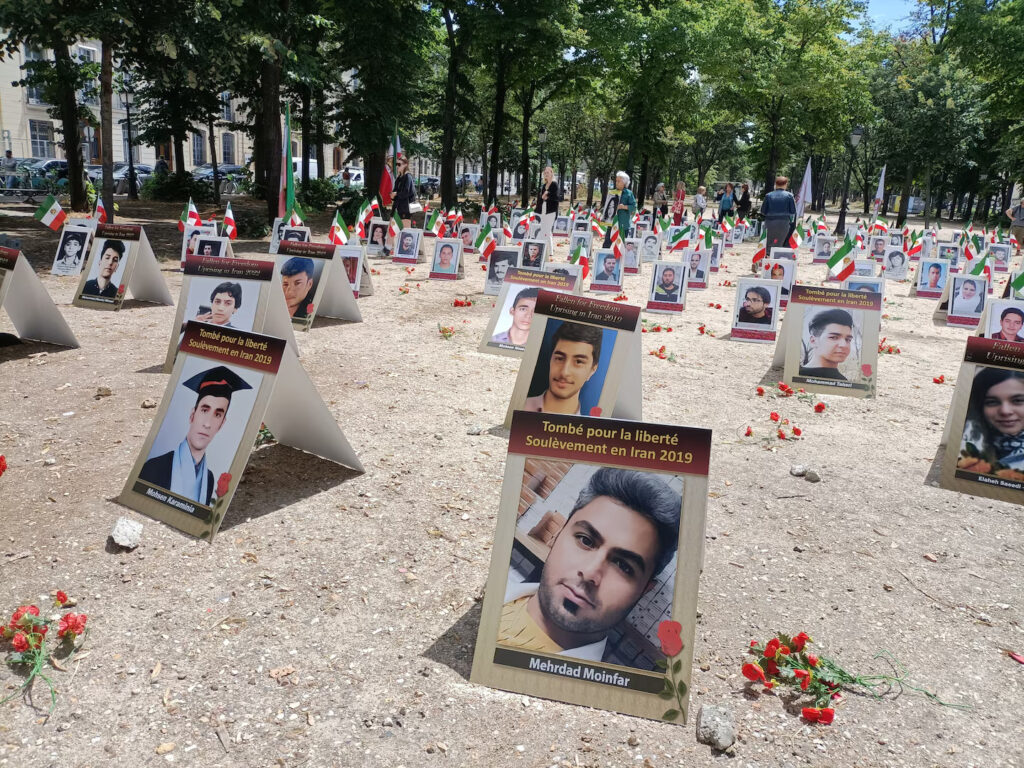
The Islamic Republic of Iran has never hesitated to use lethal force against dissent. A stark example came in 2019 when hundreds of Iranians were gunned down for protesting fuel price hikes. Despite international outcry, that bloodshed was a prelude, not a climax.
Three years later, the death of a young woman, Mahsa Amini, at the hands of the “morality police” sparked a national uprising. This time, the regime responded with strategic brutality: more than 750 protesters killed and about 30,000 arrested. But executions — not gunfire — became the regime’s long-term weapon of repression. In 2023, more than 850 people were put to death. In 2024, the number approached 1,000. This year, a U.N. special rapporteur warned that Iran is set to surpass that figure again.
At least a dozen protesters from the 2022 uprising have already been hanged. Others, accused of vague crimes such as “enmity against God” (moharebeh), are condemned for affiliations with opposition groups. These judicial killings are not just sporadic. They are calculated measures to suppress dissent and reassert control in the aftermath of two nationwide uprisings, as well as the most recent war with Israel.
The regime’s response to its perceived vulnerability in the wake of that conflict has become increasingly aggressive. While its failures may be attributed to incompetence and the foreign penetration of its security services, its fury is being directed at domestic political opponents. Thousands of Iranians are in danger as parliament now seeks to expedite death sentences in cases involving imagined collaboration with foreign entities.
If the present trajectory continues, Iran’s execution tally for 2025 could exceed any in modern memory — except, perhaps, for the horror of 1988. That summer, approximately 30,000 political prisoners were summarily executed. Their only crime was “holding onto their belief” in a democratic opposition. The death commissions responsible for those atrocities are now praised for their brutality.
This month, the Fars News Agency — a mouthpiece of the Revolutionary Guard Corps — published a chilling editorial heralding the death commissions as a “successful historical experience.” Calls for renewed purging of political dissidents have followed. Three activists allegedly linked to the Mujahedin-e-Khalq, a prominent dissident organization — Farshad Etemadi-Far, Masoud Jamei and Alireza Mardasi — were sentenced to death in July. The charge: moharebeh, the same justification used by Ayatollah Ruhollah Khomeini in 1988. Hundreds of other cases are pending.
In 1988, Iranian activists attempted to raise alarms throughout the international community as the groundwork was being laid for mass executions. Most Western officials chose to ignore the calls to action. The danger emerging with the latest executions and politically motivated arrests is not just that Iran will perpetrate another massacre, but that the world will repeat its failure in allowing it to happen.
To their credit, some experts and policymakers have already begun raising the alarm. On July 4, 10 experts at the U.N. Human Rights Council denounced the crackdown that began as the 12-day war kicked off on June 13, noting that state-media rhetoric, including calls for “surveillance” and “killings,” echoes the regime’s prior justifications for the “1988 atrocities.”
Impunity breeds impunity. It is incumbent upon global institutions to act now. The U.N. High Commissioner for Human Rights, Volker Türk, should use his authority to launch a fact-finding mission that would signal to the regime that its judicial murders would be exposed to the world. And democratic governments around the world should impose sanctions on perpetrators of Iran’s human rights abuses and downgrade diplomatic relations with Iran until it ends its systematic attempts to kill its political opponents.
We should not be under any illusions about what such moves will be able to achieve in the near term. Iran was already isolated before its 1988 massacres, and yet the regime survives to this day, under varying degrees of censure for its well-documented human rights abuses.
This is, however, no excuse for inaction. As someone experienced in bringing war criminals to justice, I know accountability is slow but never impossible. Iran’s rulers may rely on impunity today, but with sustained international effort, tomorrow they can face justice — either before their own citizens or at an international tribunal yet to be convened.