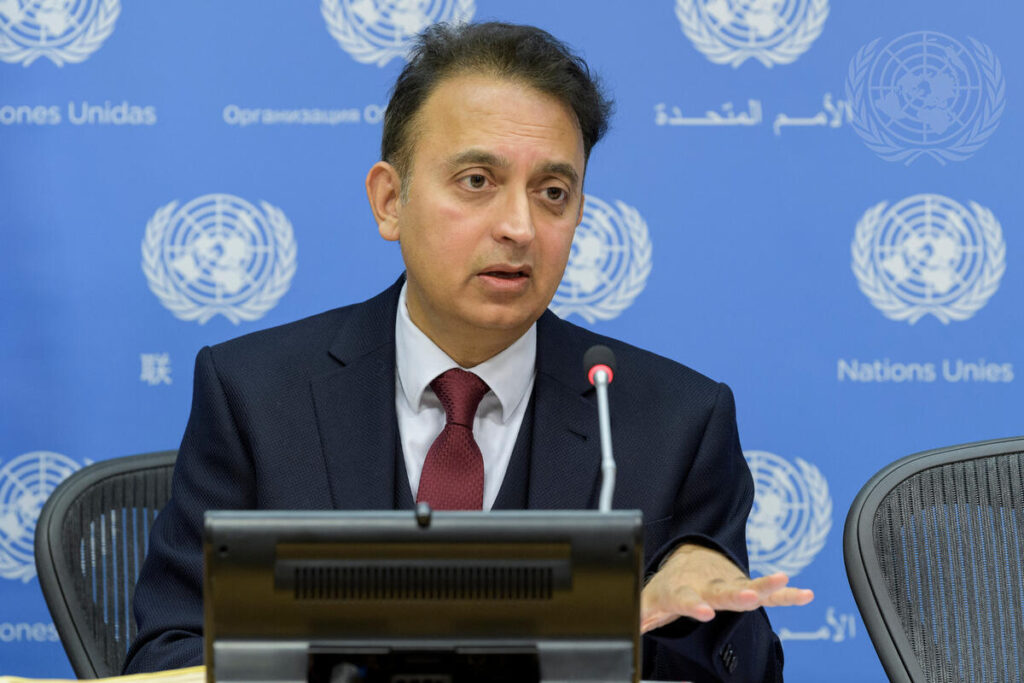
London, 22 July 2024: The United Nations Special Rapporteur on the situation of human rights in the Islamic Republic of Iran, Javaid Rehman, has published his final findings before his mandate ends on 31 July, stating that the “atrocity crimes” of summary, arbitrary and extra-judicial executions during 1981-1982 and in 1988 amounted to crimes against humanity of murder and extermination, as well as genocide.
The UN Special Rapporteur challenged the prevalent culture of impunity in Iran by underlining in the report that the 1988 extra-judicial executions and enforced disappearances of thousands of political prisoners constitute ongoing crimes against humanity.
His paper further states “there is considerable evidence that mass killings, torture and other inhumane acts against members of PMOI were conducted with genocidal intent.”
“Khomeini’s 1988 fatwa is manifestly clear that he intentionally and purposefully ordered the mass executions of all steadfast PMOI members, an ordinance which was also subsequently implemented against members of other groups. The wilful executioners implemented Khomeini’s fatwa in full knowledge that they were committing international crimes by systematically and deliberately murdering political prisoners all across the country in a coordinated manner,” the paper states.
“The magnitude and numbers of those involved in these crimes is enormous stretching from the Supreme Leader, the Sharia’s judges, the prosecutors, representative from the Ministry of Intelligence, members of the “death commission” and their facilitators; prison guards, members of the Revolutionary Guards and all those who facilitated the commission of these crimes in international law and their subsequent ongoing concealment,” the paper adds.
The UN Special Rapporteur said an international mechanism is essential to investigate and prosecute those responsible for “atrocity crimes” in Iran, including the extra-judicial killing of thousands of arbitrarily arrested prisoners during the crackdown by authorities on political dissent during the 1980s.
Among findings contained in this final paper, the Special Rapporteur said the investigative and accountability mechanism should conduct impartial and transparent investigations under international law and preserve evidence with the aim of further criminal prosecutions. “The continued concealment of the fate of thousands of political opponents and the whereabouts of their remains amounts to the crime against humanity of enforced disappearance,” Rehman said.
“I have observed the failure to ensure justice and accountability in Iran and how this is impacting the families of the victims and the current human rights situation in the country.”
The Iranian government continues to deny the “atrocity crimes”, perpetrators have not been brought to justice.
“I repeat, there should be no impunity for such gross human rights violations, regardless of when they were committed. The Iranian regime and its leaders should not be allowed to escape the consequences of their crimes against humanity and genocide. An independent international investigative and accountability mechanism for Iran is absolutely essential,” Rehman said.